Business
How Did the Vikings Get Here?
By Marcus Chen
Advertisement · Why this ad?
Katherine oversees editorial operations across all six brands. Before joining The Meridan Group, she spent 14 years at the Minneapolis Star Tribune, where she led the metro desk through its digital transformation. She holds a Master's in Journalism from Northwestern's Medill School.
More from Katherine →
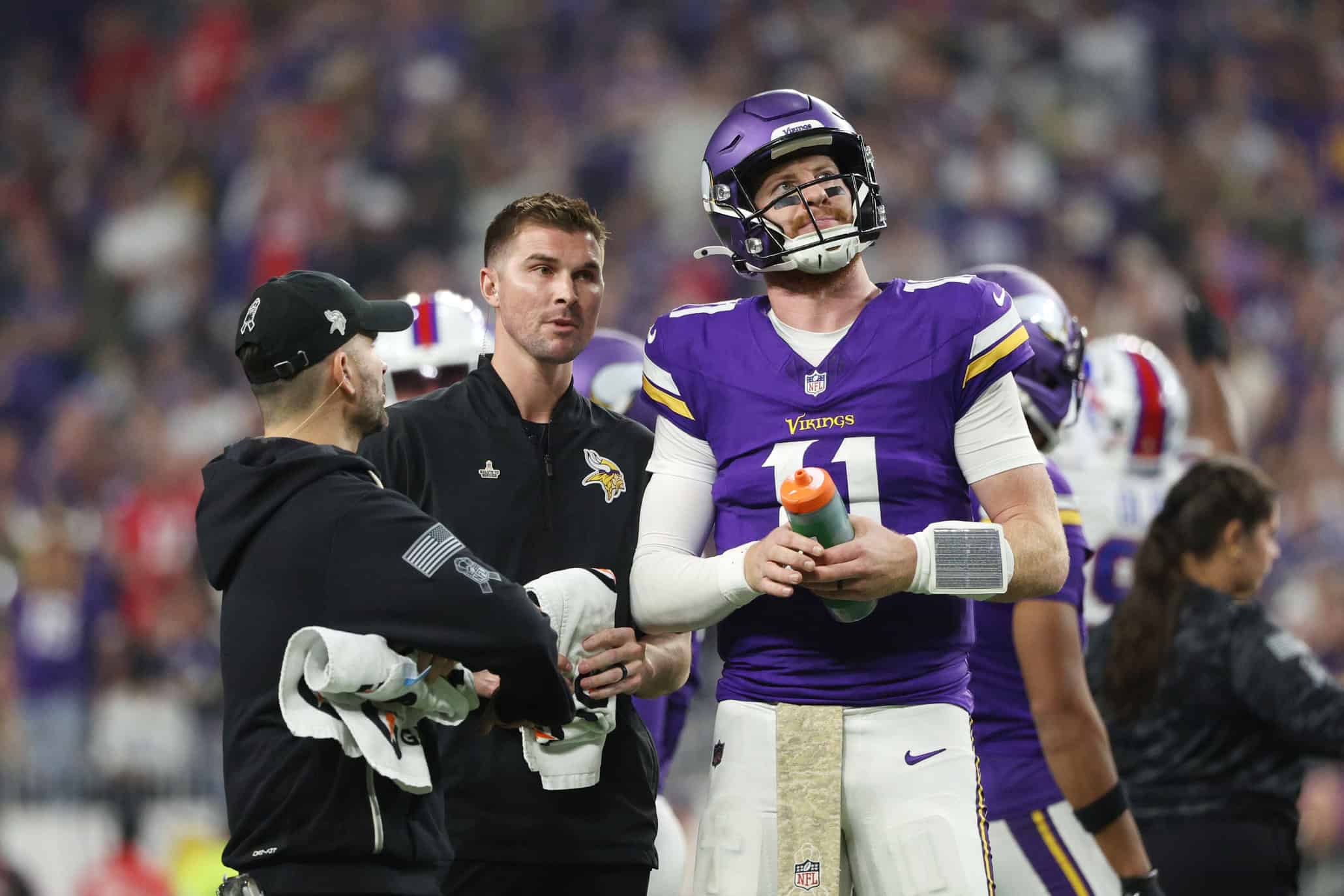
Adrian Peterson's illustrious career with the Minnesota Vikings culminated in a momentous honor as he joined the Ring of Honor. This recognition, awarded at halftime of Monday night’s game against the Buffalo Bills, marks a decade of exceptional play that left an indelible mark on both the team and its fans. Peterson, the franchise’s all-time leading rusher and fifth on the NFL's career list with 14,918 yards, sported a purple blazer and a wide smile as he watched pregame warmups on the field with family members. The ceremony was a fitting tribute to a player who embodied the grit and determination synonymous with Minnesota football, and underscored the deep connection between the team and its loyal fanbase.
Adrian Peterson’s journey with the Vikings began in 2007 when he was drafted as the seventh overall pick. The selection was met with immense excitement in Minnesota, a state deeply connected to football and hungry for a return to championship contention. Minnesota’s football history is rich, dating back to the early days of the NFL and featuring legendary players and memorable moments. The Vikings' success in the 1970s, led by quarterback Fran Tarkenton and a dominant defense, created a legacy of excellence that subsequent generations of players have strived to match. Peterson’s arrival signaled a new era of hope and potential, offering fans a glimpse of a future where the Vikings could once again compete for championships. The selection itself was a pivotal moment; the Vikings had been searching for a franchise running back to anchor their offense and revitalize the team's identity. Over his tenure, he amassed 11,747 rushing yards and 97 touchdowns, cementing his status as one of the franchise’s most productive players. His impact was so profound that he even won the NFL MVP award in 2012, a testament to his unwavering dedication and exceptional skill on the field. The Vikings’ draft history has been marked by both successes and disappointments, and Peterson's selection proved to be one of the franchise's most impactful decisions. During his tenure, he achieved numerous milestones, including breaking the team record with 224 rushing yards against the Chicago Bears in his fifth NFL game.
Three weeks later, Peterson set the NFL single-game rushing record with 296 yards against the San Diego Chargers at the Metrodome. This feat, achieved against a Chargers team led by legendary running back LaDainian Tomlinson, was particularly significant. Former head coach Brad Childress recalled how Peterson’s talent transcended surfaces, making him a standout regardless of field conditions. “Some guys are better on turf, some guys are better on grass, but it didn’t matter the surface with Adrian. It just didn’t matter. Whatever surface you put him on, he was gonna be the best player on the, on the field,” Childress said. The Metrodome, a now-demolished stadium, held a special place in Vikings history and witnessed many of Peterson’s memorable performances. The Metrodome era was marked by both triumphs and frustrations for the Vikings, and Peterson’s record-breaking performance against the Chargers remains a cherished memory for fans. The stadium's unique atmosphere, often characterized by a raucous and supportive crowd, contributed to the excitement surrounding Peterson’s early career. His ability to consistently generate explosive runs captivated fans and instilled fear in opponents. Peterson’s return from a serious injury in 2012, where he tore his left ACL, and then played in Week 1 of the following season to win the NFL MVP award, further solidified his place as a franchise icon. The sheer determination and rapid recovery demonstrated his exceptional athleticism and mental fortitude, inspiring fans and colleagues alike. The MVP award was a watershed moment, solidifying his legacy as one of the greatest players in Vikings history. The Vikings' medical staff played a crucial role in Peterson’s remarkable recovery, and his comeback story became a symbol of perseverance and resilience for the entire team. This remarkable feat highlighted not only Peterson’s physical prowess but also his unwavering mental strength and the dedication of the Vikings’ training staff.
The induction ceremony was a joyous occasion, with Peterson's family and fans in attendance. The atmosphere at U.S. Bank Stadium was electric, a testament to the deep connection between Peterson and the Minnesota community. U.S. Bank Stadium, the Vikings’ current home, represents a new chapter in the franchise’s history, offering a state-of-the-art facility and enhanced fan experience. The stadium has become a focal point for the Twin Cities, hosting not only Vikings games but also other major events. Former teammates, including Harrison Smith, shared their memories of his career. Smith recalled, “My rookie year, so it was— became normal for me to watch him run for 100, 200 yards a game. The way that he ran was— it was— he kind of had everything.” Peterson expressed gratitude for the opportunity to play for such a supportive organization and fan base, stating, “You know, like, yeah, I played this game to, to be the best to ever do it and to inspire people. I couldn’t have been drafted by a better organization and, better fan base.” Peterson's impact extended beyond the field, as he became a beloved figure in the Twin Cities, participating in charitable events and engaging with fans. His presence helped revitalize the Vikings franchise and brought a renewed sense of excitement to the state. The Vikings have a long tradition of community involvement, and Peterson’s contributions further strengthened that bond. His willingness to connect with fans, particularly children, solidified his status as a role model within the community.
Even amidst the celebratory atmosphere, Peterson reflected on missed opportunities. He reminisced about the 2009 NFC title game where the Vikings lost to the New Orleans Saints despite their stellar performance, leaving him with a lingering “what if” question. The 2009 NFC Championship game remains a source of pain and frustration for many Vikings fans. The controversial call that negated a potential game-winning touchdown run by Peterson is still debated to this day, and serves as a reminder of the fine margins that often separate victory and defeat in professional sports. “We had just missed a chance to go to the Super Bowl,” said Peterson, who was in his third season at the time. “In that moment, I never thought we wouldn’t have the chance to make it back. Now, I sit here and I’m just like, ‘Man. What if?’ ” The loss not only denied the Vikings a Super Bowl appearance but also marked the beginning of a period of instability for the franchise. The aftermath of the 2009 NFC Championship game led to significant changes within the Vikings organization, including coaching changes and personnel adjustments. The game itself was a dramatic affair, marked by a series of momentum shifts and ultimately decided by a questionable officiating call that remains a source of contention among fans. The “Minneapolis Miracle” that followed years later offered a brief moment of redemption, but the sting of the 2009 loss lingers for many.
As Peterson’s induction into the Ring of Honor was celebrated, the focus naturally turned to his future. The conversation surrounding his potential Hall of Fame induction is already underway, with many analysts and former players expressing strong support. His statistical achievements, combined with his impact on the game, make him a strong candidate for enshrinement. He remains a significant figure in the NFL, with his name on the Hall of Fame ballot for the first time in 2027. Former coach Leslie Frazier stated, “I’m sure there’s another ring, another honor coming for him, when that Hall of Fame calls, because that day will come as well.” The Pro Football Hall of Fame selection process is rigorous, but Peterson's career undoubtedly warrants serious consideration. His legacy extends beyond his individual accomplishments; he helped redefine the running back position and inspired a generation of athletes. The timeline for Hall of Fame eligibility is a significant one, requiring a waiting period before players can be considered. Peterson’s induction into the Vikings Ring of Honor is a significant step towards his ultimate enshrinement in Canton, Ohio. His impact on the game and his connection with the Vikings faithful will undoubtedly resonate for years to come.
The Vikings’ future hinges on their ability to build a sustainable winning culture, something they haven’t achieved consistently since Peterson’s departure. The team's management decisions, player development, and coaching strategies will all be key factors in determining their long-term success. The legacy of Adrian Peterson will continue to inspire the franchise and its fans for years to come.
By Marcus Chen

By Marcus Chen
By Marcus Chen

By Marcus Chen